University Profile
University of Cambridge
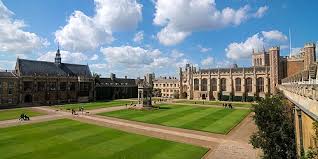
University of Cambridge campus
UK Uni Finder
About University of Cambridge
The University of Cambridge, founded in 1209, is one of the world's most prestigious academic institutions. Like Oxford, it operates a collegiate system — 31 colleges serve as the social and residential hub of student life, while the university's faculties and departments deliver teaching and research.
Cambridge is particularly renowned for its strength in STEM fields. The Cavendish Laboratory has been the site of 30 Nobel Prize-winning discoveries, from the electron to the structure of DNA. The university also has exceptional humanities and social sciences, with the Cambridge University Press being the world's oldest publishing house.
For North American students, Cambridge represents an academically rigorous alternative to Ivy League schools, often at a significantly lower total cost. The university's supervision system (Cambridge's equivalent of Oxford's tutorials) provides an intimate teaching model rarely found in North American institutions.
Key Highlights
- 1121 Nobel Prize affiliates — more than any other university in the world
- 231 colleges with distinct characters, from medieval (Peterhouse, 1284) to modern (Robinson, 1977)
- 3Supervision system: small-group teaching (typically 1-3 students) with leading academics
- 4Cavendish Laboratory: birthplace of the electron, neutron and DNA structure discovery
- 5Cambridge Judge Business School ranked among the top MBA programmes globally
- 6Isaac Newton, Charles Darwin and Alan Turing all studied or worked here
Campus & Student Life
Cambridge is a quintessential university town — the city and institution are inseparable. Student life centres on your college, where you eat, sleep, socialise and are taught. May Balls (elaborate end-of-year parties held in June, confusingly), college formals, rowing on the Cam and cycling everywhere are defining experiences. The city is small enough to walk or cycle across in 20 minutes, giving it a village-like feel despite its global reputation.
For North American Students
Min. GPA (indicative)
3.9 / 4.0
SAT/ACT Accepted
Yes
Application Route
Via UCAS
English Requirement
7.5 overall (no component below 7.0)
Cambridge actively recruits from North America and has dedicated admissions guidance for US and Canadian applicants. AP scores of 5 are typically required in relevant subjects, and the IB diploma is accepted (usually 40-42 points for competitive courses). Like Oxford, applications are made through UCAS with an October deadline, and interviews are required. Around 1,500 North American students are enrolled at any given time.
Research Strengths
Notable Alumni
Isaac Newton
Mathematician and physicist who defined classical mechanics
Charles Darwin
Naturalist who developed the theory of evolution
Alan Turing
Father of computer science and AI
Emma Thompson
Academy Award-winning actress and screenwriter
Srinivasa Ramanujan
Self-taught mathematical genius
Sylvia Plath
Poet and novelist (American who studied at Cambridge)
Key Facts
- Founded
- 1209
- Total Students
- 25,000+
- International Students
- 40%
- Tuition (Int'l UG)
- £24,507 – £63,273/yr
- Campus Setting
- Historic / City Centre
📍 About Cambridge
Cambridge is a compact city of 125,000 people, roughly an hour north-east of London by train. It sits at the heart of 'Silicon Fen,' the UK's largest technology cluster, home to over 5,000 tech and biotech companies including ARM Holdings. The surrounding East Anglian countryside is flat and ideal for cycling. Living costs are moderate — lower than London but higher than many other UK university cities.
Ready to Apply?
UK undergraduate applications are made through UCAS. Postgraduate applications go direct to the university.
Visit University Website →Check UCAS Points →📍 Cambridge City Guide
Find out what it's really like to study and live in Cambridge.
Read the guide →